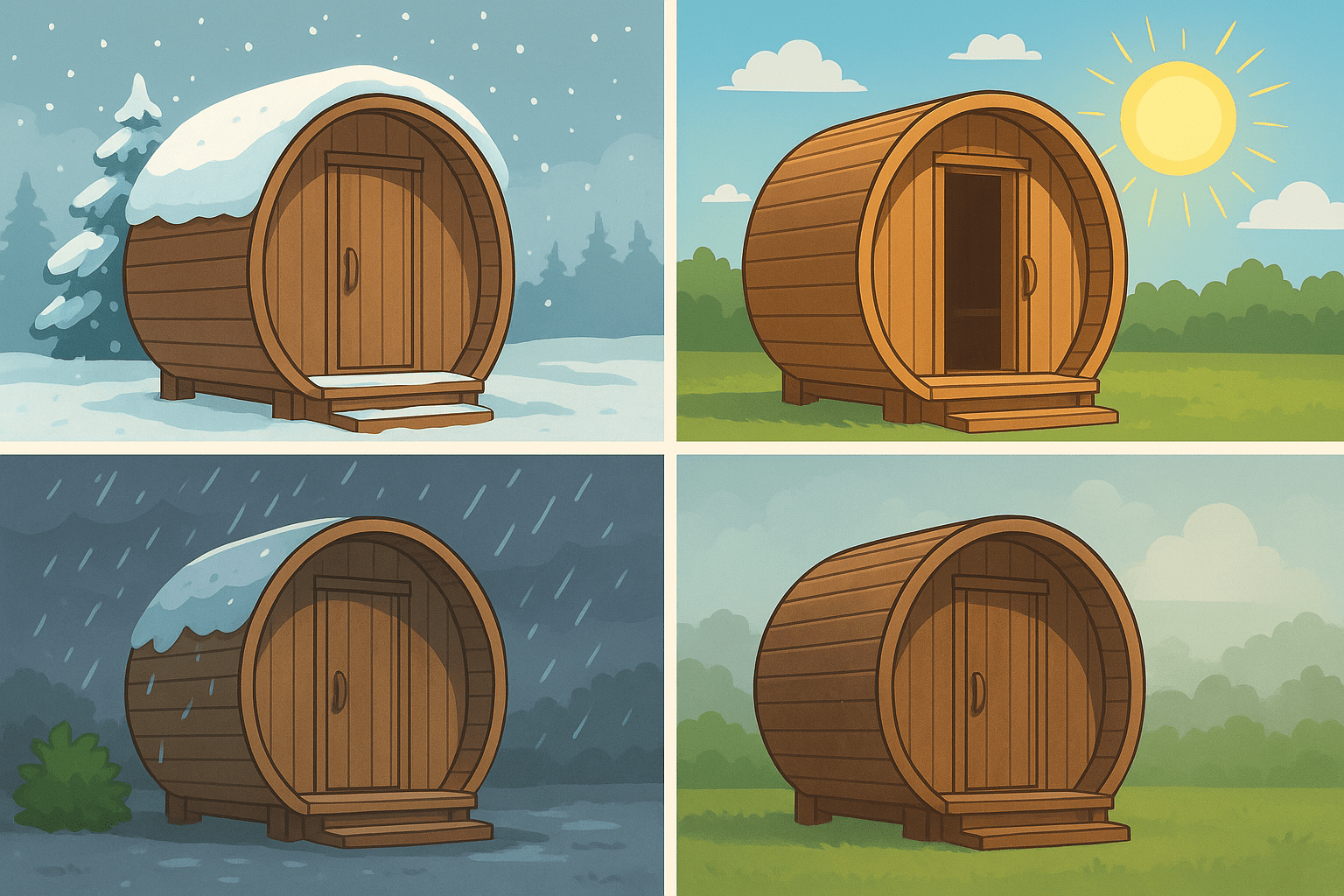
Outdoor saunas add warmth and relaxation to your backyard, but they are also exposed to weather, temperature fluctuations, and humidity. Understanding how these factors affect sauna wood is essential for maintaining its beauty, safety, and longevity. With proper care, your sauna can withstand the harshest conditions and remain a reliable retreat for years.
1. Winter Challenges: Cold and Moisture
Cold temperatures and snow can be tough on sauna wood. Wood fibers contract in freezing conditions, which may cause minor cracks or splits. Accumulation of snow and ice on the roof or around the sauna base increases the risk of moisture infiltration. Repeated freeze–thaw cycles can weaken structural components if the sauna is not properly insulated and ventilated.
Tip: Ensure the sauna is slightly elevated or has a proper drainage system to prevent standing water. Regularly remove snow from the roof and surrounding areas to protect the wood.
2. Sun Exposure: UV Damage and Fading
Sauna wood can dry out and crack when exposed to direct sunlight. UV rays break down natural wood pigments in species like spruce and pine, leaving them washed out or silver-gray. Prolonged sun exposure can also dry the wood too quickly, potentially causing minor warping or splits.
Protection: Applying eco-friendly, UV-resistant oils or sealants can slow the effects of sunlight while maintaining the wood’s natural feel and breathability. Choosing UV-stable woods like cedar or thermowood can further enhance resilience.
3. Rain and Humidity: The Silent Threats
High humidity and rainfall are major causes of wood damage. Persistent moisture can lead to mold, rot, and warping if ventilation is inadequate. Wood panels absorb water unevenly, causing expansion and contraction that creates surface irregularities over time.
Maintenance Tips:
- Always allow your sauna to ventilate after use to let residual steam escape.
- Treat the wood with natural oils that protect against moisture while allowing the wood to breathe.
- Inspect joints and seams regularly to prevent water from seeping into structural areas.
4. Wind and Debris: Additional Considerations
Strong winds can carry dirt, leaves, and debris that may scratch or abrade the wood surface. Over time, this can create rough spots and reduce the wood’s aesthetic appeal. Trees near the sauna can also deposit sap or leaves that stain or stick to surfaces.
Preventive Measures: Position the sauna in a sheltered location, use protective covers when not in use, and clean the exterior surfaces regularly.
5. Seasonal Maintenance Checklist
To survive outdoor conditions, sauna wood requires seasonal attention:
- Spring: Inspect for water damage, mold, or cracks after snow and ice melt.
- Summer: Apply UV-protective oil or sealant and clean surfaces from debris.
- Autumn: Check for loose boards, leaks, or areas prone to mold before winter.
- Winter: Remove snow and ice, and ensure ventilation isn’t blocked by frost.
Regular seasonal maintenance prevents minor issues from becoming major problems, prolonging the life of your sauna.
6. Expert Advice for Long-Term Durability
For detailed guidance on protecting your outdoor sauna wood against the elements, including tips on cleaning, oiling, and seasonal upkeep, check out the Backcountry Recreation blog. Their resources offer step-by-step instructions to maintain your sauna’s wood health while keeping it functional and beautiful throughout the year.
7. Conclusion
Outdoor elements like cold, sun, rain, and humidity might seem intimidating, but with the right knowledge and preventive care, your sauna wood can thrive. Elevation, ventilation, eco-friendly treatments, and seasonal inspections are key to avoiding mold, rot, cracking, and discoloration. Understanding and respecting how wood naturally responds to these conditions will ensure your sauna remains a safe, comfortable, and long-lasting retreat, ready for enjoyment year round.