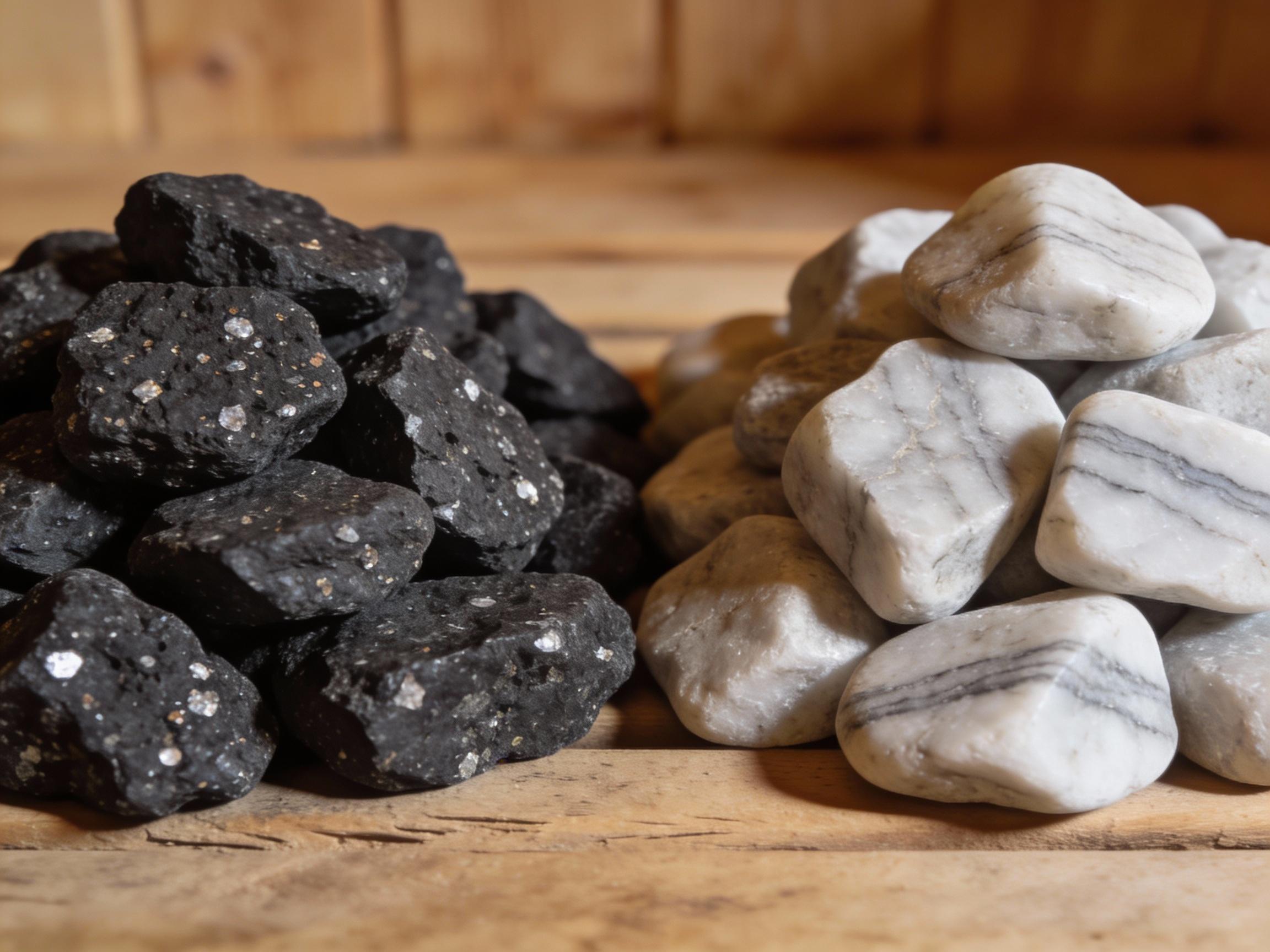
Sauna stones form the thermal heart of any wood-fired sauna, yet most owners never venture beyond commercially packaged options that cost $3-5 per kilogram. Understanding geological properties enables you to source high-performance stones locally for free while optimizing heat retention, steam quality, and longevity based on your specific sauna usage patterns.
Igneous Rocks: The Heat Retention Champions
Igneous rocks formed from cooled magma possess dense crystalline structures that excel at absorbing and radiating heat over extended periods. Peridotite and olivine-rich basalts represent the premium tier of igneous sauna stones, with thermal conductivity ratings of 3.5-4.2 W/m·K that allow rapid heat absorption during firing. Gabbro and dolerite offer nearly identical performance at easier availability—look for dark gray to black stones with uniform coloration and no visible layering or banding. These rocks withstand temperature cycling between 20°C and 400°C repeatedly without fracturing, typically lasting 3-5 years of regular use before requiring replacement.
Metamorphic Alternatives: Steam Quality Specialists
Metamorphic rocks created under high pressure develop aligned mineral structures that produce distinctly different sauna experiences. Quartzite generates exceptionally dry, penetrating heat due to its crystalline silica composition, making it ideal for traditional Finnish-style saunas where temperatures exceed 85°C. Soapstone releases heat gradually and gently, maintaining stable temperatures for 45-60 minutes after fires burn down—perfect for extended meditation sessions or therapeutic applications. Hornfels, a contact metamorphic rock, combines moderate heat retention with excellent thermal shock resistance, rarely cracking even when cold water hits stones at peak temperature.
Field Identification and Safety Testing
Never collect stones from riverbeds or beaches, as water-saturated rocks contain microscopic moisture pockets that explosively vaporize when heated above 150°C. Source stones from dry geological exposures, road cuts, or quarry sites at least 50 meters from any water source. Perform the thermal shock test before installation: heat candidate stones in a campfire to red-hot temperature, then immediately submerge in cold water. Stones that survive three cycles without cracking, fragmenting, or producing loud popping sounds pass basic safety requirements. Reject any stones showing layering, banding, or flaky surfaces—these sedimentary characteristics indicate high failure risk under sauna conditions.
Size and Shape Optimization
Stone dimensions dramatically affect heat transfer efficiency and airflow through your stove. Target stones sized between 10-15cm diameter for primary heating mass, as smaller stones lack sufficient thermal mass while larger stones create dead air pockets that reduce combustion efficiency. Smooth, rounded stones provide 20-30% better airflow than angular fragments, though excessively polished river rocks revert to the moisture retention problem. Create a three-layer system: 15cm stones on the bottom for maximum thermal mass, 10cm stones in the middle layer for balanced heating, and 8cm stones on top for rapid steam generation when water contacts their quickly heated surfaces.
Mineral Content and Steam Characteristics
Rock mineral composition affects the sensory quality of steam produced when water vaporizes on hot surfaces. High-iron content stones like magnetite-rich basalt produce slightly metallic-scented steam that some users find invigorating, while pure quartzite generates completely neutral steam. Avoid stones containing sulfides (identified by metallic yellow or brassy flecks), as these release hydrogen sulfide gas when heated, creating unpleasant rotten egg odors. Serpentinite, despite its excellent heat properties, can contain asbestos minerals—only collect this green-tinged stone if you can verify it comes from asbestos-free geological zones through local geological surveys.